
AI Employee Systems vs Traditional Staff: When to Automate Customer Service

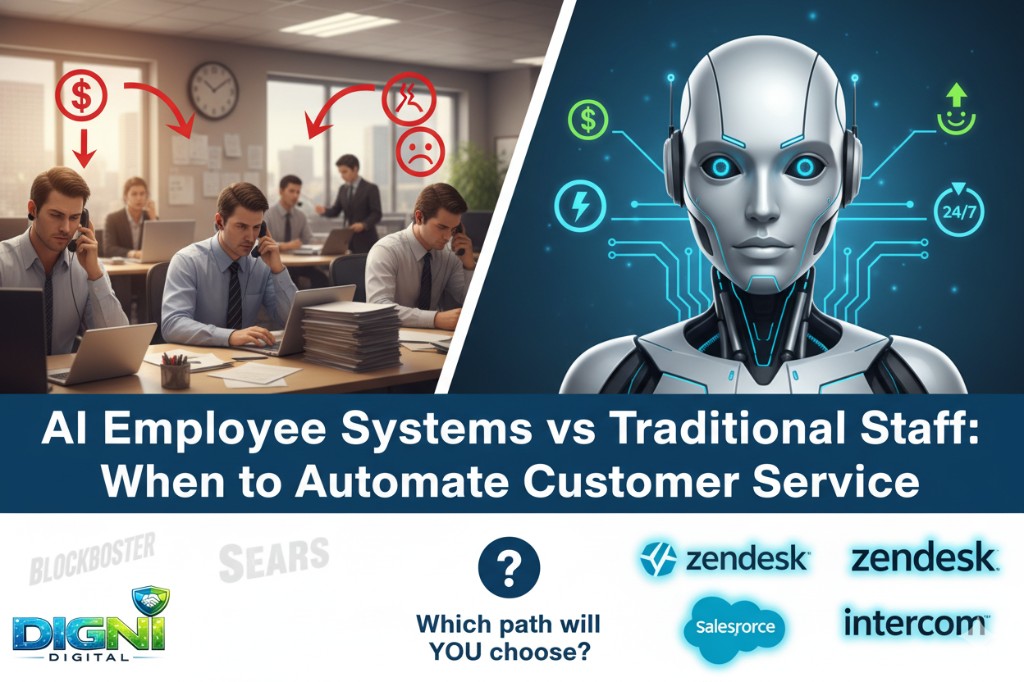
AI Employee Systems vs Traditional Staff: Finding the Right Balance
Deciding when to use AI employee systems versus human staff is a critical business decision. The optimal solution often combines both, with AI handling routine tasks and humans focusing on complex, high value interactions. This guide helps you determine the right blend for your business.
Understanding When to Automate
AI employee systems excel at handling routine, repetitive tasks that follow predictable patterns. Understanding which tasks are suitable for automation helps you maximize efficiency while maintaining quality customer experiences.
"The best customer service combines AI efficiency with human empathy. AI handles the routine, humans handle the complex. That's the sweet spot." - Lisa Thompson, Customer Experience Director
Progressive Regulatory Approaches
1. Regulatory Sandboxes
Countries like Kenya, Nigeria, and South Africa have created regulatory sandboxes where AI companies can test innovations with reduced restrictions. These programs have enabled 450 AI startups to launch and scale.
- Fast Track Approval - Reduced time for regulatory review
- Limited Liability - Protection during testing phases
- Data Sharing - Access to government datasets
- Mentorship - Guidance from regulators
2. Data Protection Laws
Clear data protection frameworks build trust and enable AI development. Countries with strong data laws see 3x more AI investment.
3. AI Ethics Guidelines
Governments are establishing AI ethics frameworks that ensure responsible development. These guidelines attract ethical investors and build public trust.
Case Study: Kenya's AI Regulatory Framework
Kenya has created comprehensive AI regulations:
- Data Protection Act: Clear rules on data collection and use
- Regulatory Sandbox: 120 AI companies testing innovations
- AI Ethics Board: Oversight for responsible AI development
- Tax Incentives: Reduced taxes for AI companies
Results: Kenya has attracted $850 million in AI investment and created 45,000 AI jobs.
The Economic Impact
Good regulation drives economic growth:
- Investment Attraction: $2.3 billion in AI funding
- Job Creation: 180,000 new AI jobs
- Startup Growth: 450 new AI companies
- Tax Revenue: $340 million in new tax income
Key Success Factors
1. Stakeholder Engagement
Regulations developed with industry input see 85% compliance rates compared to 45% for top down rules.
2. Flexibility
Frameworks that adapt to new technologies attract more innovation. Flexible regulations see 3x more startups.
3. International Alignment
Regulations aligned with global standards enable cross border business. Aligned frameworks see 5x more international investment.
Future Outlook
The next phase will focus on:
- AI Governance Bodies: Dedicated agencies for AI oversight
- Cross Border Frameworks: Regional AI regulations
- AI Standards: Common technical standards across countries
- Public Private Partnerships: Collaborative regulation development
Tasks Best Suited for AI Employee Systems
1. Routine Inquiries
AI excels at handling common questions:
- Business hours and location information
- Product and service details
- Pricing and availability questions
- Basic troubleshooting
- Appointment scheduling
2. High Volume, Low Complexity Tasks
Tasks that occur frequently but are straightforward:
- Order status inquiries
- Account balance checks
- Password resets
- Basic form submissions
- FAQ responses
3. 24/7 Availability Needs
When customers need support outside business hours:
- After hours inquiries
- Weekend support
- Holiday coverage
- International time zones
Tasks Best Suited for Human Staff
1. Complex Problem Solving
Situations requiring judgment and creativity:
- Multi step problem resolution
- Custom solutions for unique situations
- Escalated complaints
- Strategic consultations
2. Emotional Support
When empathy and understanding are critical:
- Upset or frustrated customers
- Delicate situations
- Relationship building
- Trust building interactions
3. High Value Interactions
When the relationship value justifies human attention:
- Enterprise sales
- Key account management
- Strategic partnerships
- Complex negotiations
The Optimal Blend: Hybrid Approach
Most businesses benefit from combining AI and human staff:
AI First Model
AI handles initial contact, humans take over when needed:
- AI answers routine questions immediately
- AI qualifies leads and gathers information
- AI escalates complex issues to humans
- Humans focus on high value interactions
Human First Model
Humans handle primary interactions, AI supports:
- Humans provide primary customer service
- AI provides information and suggestions
- AI handles after hours inquiries
- AI manages routine follow ups
Decision Framework
Use these criteria to decide when to automate:
- Volume: High volume tasks benefit more from automation
- Complexity: Simple, routine tasks are better for AI
- Variability: Predictable tasks suit AI better
- Emotional Content: Emotional situations need human touch
- Value: High value interactions justify human attention
Action Steps for Implementation
For businesses deciding between AI and human staff:
- Analyze Current Operations: Identify which tasks are routine vs complex
- Define Success Metrics: Determine how you'll measure success
- Start with Hybrid Approach: Begin with AI handling routine, humans handling complex
- Monitor Performance: Track metrics for both AI and human interactions
- Optimize Continuously: Adjust the blend based on results and feedback
The optimal customer service strategy combines AI efficiency with human empathy. By using AI for routine tasks and humans for complex interactions, businesses deliver better experiences while improving efficiency and reducing costs.
Ready to find the right balance between AI and human staff? Book a consultation to discuss your customer service strategy.
Tags
Ready to Turn Insight Into Action?
Whether you're building a business, guiding students, or finding your calling, let's discuss the next practical step.
Book Your Free Consultation